
harry potter - Recreational Drugs in the Wizarding World


Knowing that there are some potions or magic that have drug-like side effects (Liquid Luck, for example makes Harry seem positively high and the Love Potion makes Ron seem literally drunk [with love]), those effects are not the main intention.


Are there any example of purely recreational spells or potions that are used in the Potter Universe?


I'm also interested in any performance enhancers, memory spells or painkilling spells/potions that are abused by intentionally overdosing.


Answer


There are quite a few substances, charms and plants seen in the Harry Potter universe that are analogous to drugs:


The "Euphoria Elixir" mentioned in Half Blood Prince.


  • The primary effect is to induce a state of 'inexplicable, irrational happiness'.


Cheered by this thought, Harry skimmed through his copy of Advanced Potion-Making and found a heavily corrected Half-Blood Prince’s version of An Elixir to Induce Euphoria, which seemed not only to meet Slughorn’s instructions, but which might (Harry’s heart leapt as the thought struck him) put Slughorn into such a good mood that he would be prepared to hand over that memory if Harry could persuade him to taste some


‘Well, now, this looks absolutely wonderful,’ said Slughorn clapping his hands together an hour and a half later, as he stared down into the sunshine-yellow contents of Harry’s cauldron. ‘Euphoria, I take it? And what’s that I smell? Mmmm … you’ve added just a sprig of peppermint, haven’t you? Unorthodox, but what a stroke of inspiration, Harry. Of course, that would tend to counterbalance the occasional side-effects of excessive singing and nose-tweaking … I really don’t know where you get these brainwaves, my boy … unless –’


The "Cheering Charm" mentioned in Prisoner of Azkaban


  • The primary effect is to 'make a person happy' however, when overdone it can create a stupor and fits of hysterical laughter


‘She could’ve done with a Cheering Charm on her, too,’ said Ron, as the class left for lunch, all grinning broadly – the Cheering Charms had left them with a feeling of great contentment.


[snip]


Then, after a hasty lunch, it was straight back upstairs for the Charms exam. Hermione had been right; Professor Flitwick did indeed test them on Cheering Charms. Harry slightly overdid his out of nerves and Ron, who was partnering him, ended up in fits of hysterical laughter and had to be led away to a quiet room for an hour before he was ready to perform the Charm himself.


Alihotsy, mentioned in Fantastic Beasts and Where to Find Them


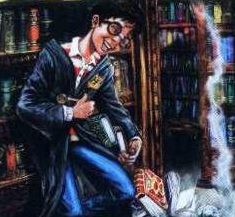
  • Mentioned in Fantastic Beasts, Alihotsy (also known as the Hyena tree) is described as a magical tree, the leaves of which can induce hysteria and uncontrollable laughter.


The Glumbumble (northern Europe) is a grey, furry-bodied flying insect that produces melancholy-inducing treacle, which is used as an antidote to the hysteria produced by eating Alihotsy leaves.


The Trading Card Game also suggests that the leaves can be brewed into a draught and that drinking it (or inhaling the fumes) will induce the same hysteria...

enter image description here


Billywig Stings, as mentioned in Fantastic Beasts and Where to Find Them


  • The primary effect is giddiness and uncontrollable levitation


Those who have been stung by a Billywig suffer giddiness followed by levitation. Generations of young Australian witches and wizards have attempted to catch Billywigs and provoke them into stinging in order to enjoy these side effects


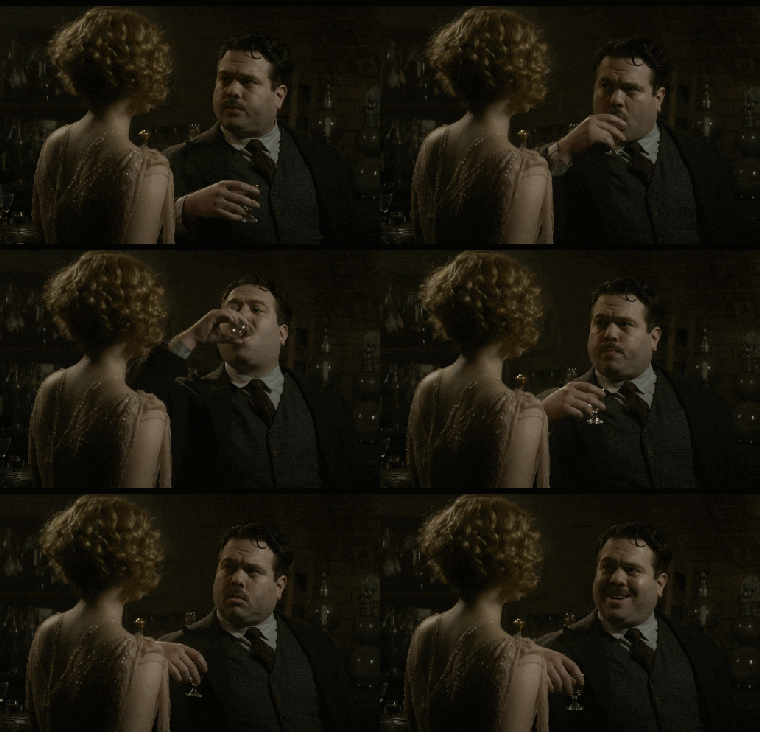
  • Its primary effect seems to be to induce uncontrollable laughter

enter image description here


Comments

Popular posts from this blog

futurama - How much time is lost in 'Time Keeps on Slippin''

In time Keeps on Slippin' , Farnsworth creates a basketball team which he matures by abusing Chronitons. This leads to time skipping forward by random, but ever increasing amounts. How much time was skipped in this way? Answer Unfortunately, I don't think a good estimate can be made for this, for two reasons: Many of the time skips move forward by an indeterminate amount of time. At one point, the Professor mentions localized regions of space skipping forward much more than others. We then see two young boys on the street below complaining about having to pay social security, only to suddenly become senior citizens and start complaining about wanting their money. Thus, each individual could have experienced a different amount of time skippage.

harry potter - How could Expelliarmus beat Avada Kedavra?

I want to be very careful about how I ask this question – I am not asking How did Voldemort die? [CLOSED] Below the text is the relevant passages from Harry Potter and the Deathly Hallows if anyone wants to review them (I'm sorry for the amount of text). How did Expelliarmus beat Avada Kedavra and kill Voldemort? I feel the reason Harry's Expelliarmus overpowered Voldemort's Avada Kedavra curse has to do with who was master of the Elder Wand and how the Elder Wand works. I've always had trouble understanding fully how the Elder Wand works, though. How much did the fact that Voldemort never truly won or mastered the Elder Wand factor into how Expelliarmus reacted to Avada Kedavra and caused Avada Kedavra to rebound and kill Voldemort? An answer based in book canon would be especially welcome, but any canon source really is fine. Harry heard the high voice shriek as he, too, yelled his best hope to the heavens, pointing Draco’s wand: ‘ Avada Kedavra !’ ‘ Expelliarmus !...

game of thrones - Is Syrio Forel dead?

In the episode 'The Pointy End' (Season 1 Episode 8) when Arya runs from the Lannister guards you hear the sound of a sword being dropped (around 4:56): [embedded content] After that neither Syrio or Ser Meryn Trant is never mentioned or seen in the show again, except when Arya mentions to the Hound that Ser Meryn Trant killed Syrio. Is there any mention in the books that Syrio actually dies?

tolkiens legendarium - Difference between elves and dwarves blacksmithing in the Lord of the Rings

Both the elves and the dwarves were famous for their metal work in the Lord of the Rings trilogy, but what is the difference between what they made, and which one had the better skill of making amours and swords? Answer James Christopher's answer sums up the second part of your question well, but as to the difference in what they made, a little more detail is needed. Once the Elves learned to forge with steel, the shape of the sword changed, now being able to take on the form of a great broadsword or a light and agile curved sword. Additionally, they took great pride in decorating their swords. As we see in the Lord of the Rings , some swords like Sting had magical properties such as glowing blue when orcs are near. As far as the use of Mithril, lotr.wikia has two contradictory passages: Thus, Elven blades became renowned as great weapons, capable of performing deeds beyond the skill of their handlers and were even more glorious when the use of Mithril was allowed to the Elves. ...