
Are there any other episodes of Star Trek that deal with mental health?


Back when the series was produced, mental health was not as widely discussed as it is today. I recently re watched S5E03 of Star Trek: Voyager ("Extreme Risk") which shows B'Elanna Torres self-harming to deal with the trauma of discovering that many of her friends were massacred in a battle back in the Alpha Quadrant. The doctor diagnoses her with clinical depression. These topics were not widely shown on TV at the time, and as usual, Star Trek was way ahead of its time in showing the effects of mental health.


However, I can't recall any other episode which specifically deals with mental health. Are there other episodes of VOY or any other ST that explicitly deal with mental health/depression/suicide? I was very impressed with how the topic was handled, specifically that grief can cause these symptoms and that they can be handled. Though slightly disappointed that she sort of "magically" recovers...


Is there any reference to a character struggling with a long-term mental illness that is openly discussed on the show?


Answer


I can't recall any other episode which specifically deals with mental health.


Star Trek is full of plots that deal with mental health. I think just about every episode contains some discussion around mental health in one form or another. Here are a few examples of plots that span multiple episodes or movies:


  • Deanna Troi serves as ship's counselor, and we see several crew members attending therapy.

  • The crew of Voyager deals with being so far away from home.


  • Benjamin Sisko copes with the loss of his wife.

  • Julian Bashir comes to grips with being outed as a genetically modified person.

  • Worf struggles with being the first Klingon in Starfleet.

  • Jean-Luc Picard deals with his assimilation (it's a major plot point in First Contact) and the death of his brother and nephew.

  • Data strives to feel emotions, and to understand what it's like to be human.


Is there any reference to a character struggling with a long-term mental illness that is openly discussed on the show?


The first character that comes to mind is Reginald Barclay.


Reginal Barclay


From Wikipedia, emphasis mine:


While possessing great technical skill and sincere enthusiasm, Barclay seems anxiety-ridden, socially awkward, and self-conscious. He also displays stuttering and dysfluent speech behaviors, especially when nervous or anxious, along with some secondary gestures, such as facial grimaces and small head tics, however on the holdeck many of these issues vanish and he acts confident. He has an obsessive interest in fantasy, which seems to serve as an escape from personal interactions, especially those where he is being mistreated by others. Barclay's anxieties extend to idiosyncratic fears (such as fear of being transported) and hypochondriasis. The overcoming of his fears and social anxieties became a running plot point across many seasons in multiple Star Trek series.


Miles O'Brien also has a few story lines related to his mental health.
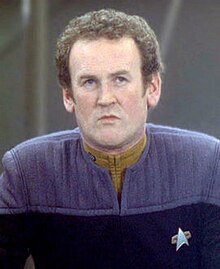

Miles O'Brien


Again, from Wikipedia:


The TNG episode "The Wounded" establishes that O'Brien served as tactical officer aboard the USS Rutledge during the Cardassian War and that he was emotionally scarred by the Cardassians' massacre of hundreds of civilians on Setlik III.


...


The producers would routinely put O'Brien under intense psychological pressure in episodes jokingly dubbed 'O'Brien must suffer'.


...


Miles was temporarily relieved of duty after a visit to the planet Argratha. O'Brien had been falsely accused of espionage and was given the simulated memory of a 20-year prison sentence. O'Brien became paranoid and emotionally distressed upon his return to the station and attempted suicide (Episode: "Hard Time").


Comments

Popular posts from this blog

futurama - How much time is lost in 'Time Keeps on Slippin''

In time Keeps on Slippin' , Farnsworth creates a basketball team which he matures by abusing Chronitons. This leads to time skipping forward by random, but ever increasing amounts. How much time was skipped in this way? Answer Unfortunately, I don't think a good estimate can be made for this, for two reasons: Many of the time skips move forward by an indeterminate amount of time. At one point, the Professor mentions localized regions of space skipping forward much more than others. We then see two young boys on the street below complaining about having to pay social security, only to suddenly become senior citizens and start complaining about wanting their money. Thus, each individual could have experienced a different amount of time skippage.

What is Tolkien trying to say in this letter?

In a draft of a letter, later recorded as #246, Tolkien makes a strange statement. I am interested in the first few sentences of the letter, but I will include the remainder for the sake of context. In the 'Mirror of Galadriel', 1381, it appears that Galadriel conceived of herself as capable of wielding the Ring and supplanting the Dark Lord. If so, so also were the other guardians of the Three, especially Elrond . But this is another matter. It was part of the essential deceit of the Ring to fill minds with imaginations of supreme power . But this the Great had well considered and had rejected, as is seen in Elrond's words at the Council. Galadriel's rejection of the temptation was founded upon previous thought and resolve. In any case Elrond or Galadriel would have proceeded in the policy now adopted by Sauron: they would have built up an empire with great and absolutely subservient generals and armies and engines of war, until they could challenge Sauron and destroy ...

tolkiens legendarium - Was Galadriel's temptation of Boromir instrumental to his fall?

We know Galadriel tempted the members of the Fellowship, did she tempt Boromir with visions of taking the Ring and saving Gondor? In the books, Boromir willingly accepts the judgement of the council that the Ring should be destroyed, but after the meeting with Celeborn and Galadriel his personality seems to change. Was the temptation offered by Galadriel in some way responsible for Boromir's fall? Answer It's likely, but not certain I believe it is likely Galadriel tempted him with the ring, and in doing so re-ignited a pre-existing idea to take the ring, but to be clear lets break this down into three parts. Boromir at the Council of Elrond Boromir after setting off Boromir after being tempted Boromir at the Council of Elrond Boromir pleas for the ring to go to Minas Tirith, to help Gondor in its defense against Mordor. “ Why should we not think that the Great Ring has come into our hands to serve us in the very hour of need? Wielding it the Free Lords of the Free may surely...

harry potter - What is the difference between Diffindo and Sectumsempra?

In the Harry Potter books, Diffindo is called the 'Severing Charm' and it’s most commonly used to cut ropes and the like. However, in the last book Hermione uses it on Ron but misses, creating a 'slash in his jeans' and his knee gets cut, causing him to 'roar in pain'. We've only seen Sectumsempra used once on screen when Harry directly uses it on Malfoy in the sixth book, but there it's mentioned that he is 'waving his wand wildly'. Wouldn't Diffindo, if used in such a fashion also cause a similar effect? Similarly, if it was able to cut Ron, it would also be able to, say, chop off an ear (George's)? In that case, how are these two spells different, except for Sectumsempra seemingly used exclusively to hurt humans? Answer While Diffindo and Sectumsempra both can be countered by other spells, Diffindo is far more easily countered. Reparo, a relatively common spell, can completely reverse its effect when used once. “He pulled the old cop...